
Commercial Battery · NSW
One Commercial Battery, Several Promises: Do the Benefits Fit Together?
A battery proposal may cover energy management, peak demand and backup. NSW businesses should test whether those benefits fit one design before committing.
UR Energy editorial team ·
Look beyond the combined promise
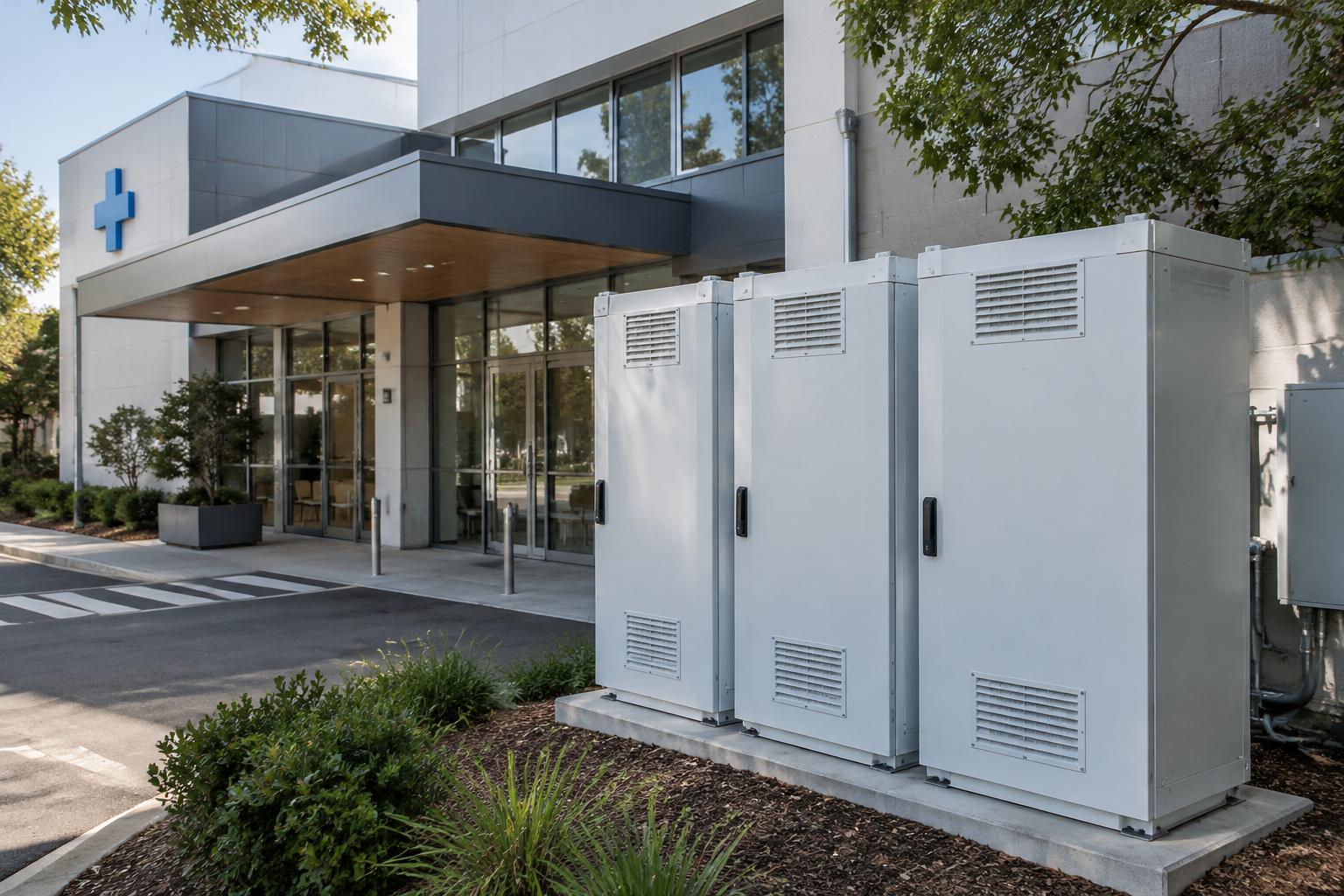
A commercial battery can sound especially attractive when one proposal promises several outcomes: better energy management, lower peak demand charges and electricity during an outage. The decision is not simply whether each benefit sounds useful. It is whether the proposed configuration supports the combination your business expects.
For NSW warehouses, hospitality venues, manufacturers, retailers and medical businesses, the useful question is: are we assessing one coherent design, or several separate possibilities presented together? Before committing, ask for each expected benefit to be connected to a clear design explanation and investment assessment.
Separate the claims before assessing the package
Start by asking the proposal to distinguish energy management, possible peak demand charge reductions and backup. The NSW Government’s battery storage guide says business batteries can help manage energy use and may reduce peak demand charges, but suitability needs investment assessment. Neither benefit should be treated as an automatic result of purchasing a battery.
Backup needs its own explicit check. Australian Government guidance states that a battery supplies electricity during outages only when configured for backup. A proposal that describes a battery as useful for everyday energy management has not, by that description alone, established that it will supply your business during an outage.
Ask which outcomes are included in the proposed design, which remain conditional and which are outside the proposal.
Ask whether the expectations fit one configuration
Once the benefits are separated, bring them back together as design questions. If the business expects both everyday energy management and backup, ask how the proposed configuration addresses both. Are there conditions under which one expectation would not be met? What assumptions does the assessment make about how the battery would be used?
Do not accept separate descriptions of possible benefits as proof that the full package suits your site. Ask the assessor to explain the combined arrangement in plain language, including any limits or choices that need your approval.
This is not about assuming the benefits conflict. It is about avoiding the opposite assumption: that every benefit mentioned in a discussion is included, compatible and supported by the same assessment.
Keep solar and grid expectations realistic
If solar forms part of the proposal, check that its design has its own basis. Australian Government guidance says solar size depends on electricity use and timing, budget, sunny roof space and installation complexity. Ask how those considerations support the solar component rather than treating solar as a general justification for adding a battery.
Keep grid electricity in the discussion too. Tariffs vary by customer and location, and businesses with solar often continue buying grid electricity. Ask which tariff assumptions underpin any proposed peak demand benefit and what grid purchasing the assessment expects to continue. A combined solar and battery proposal should not be read as a promise to eliminate grid purchases.
Use a combined-benefits decision checklist
Before approving a purchase, work through these questions with the assessor. Is every claimed benefit named separately? Is each described as included, conditional or excluded? Has backup configuration been explicitly confirmed if outage supply is expected?
Then check the combined case. Has the assessor explained how the proposed design addresses the benefits together? Are any limits clearly recorded? Does the investment assessment reflect your customer and location-specific tariff assumptions? If solar is included, have electricity use and timing, budget, roof space and installation complexity been considered?
Finally, ask whether you would still consider the investment if an unconfirmed benefit were removed. If the answer is no, resolve that uncertainty before proceeding.
Leave room for a no-buy outcome
There are valid reasons not to buy: the investment assessment may not support suitability, expected backup may be absent from the configuration, or a benefit essential to your decision may remain unsubstantiated. A longer list of possible uses is not, by itself, a stronger investment case.
For your next step, ask UR Energy for a NSW site assessment focused on whether the combined benefits you expect are supported by one clearly defined commercial battery proposal.
Sources & further reading
- Australian Government — Solar for businesses
- NSW Government — Battery storage guide
- Australian Government — Batteries
- Australian Government — Electricity tariffs
AI-assisted editorial content based on the sources above. General information, not a site-specific recommendation. Confirm current requirements before committing to a project.