
Solar + Battery · NSW
More Solar or a Battery? Deciding Where a Limited Energy Budget Belongs
For NSW businesses with a fixed energy budget, more solar and battery storage need separate investment cases. Compare their purpose before allocating funds.
UR Energy editorial team ·
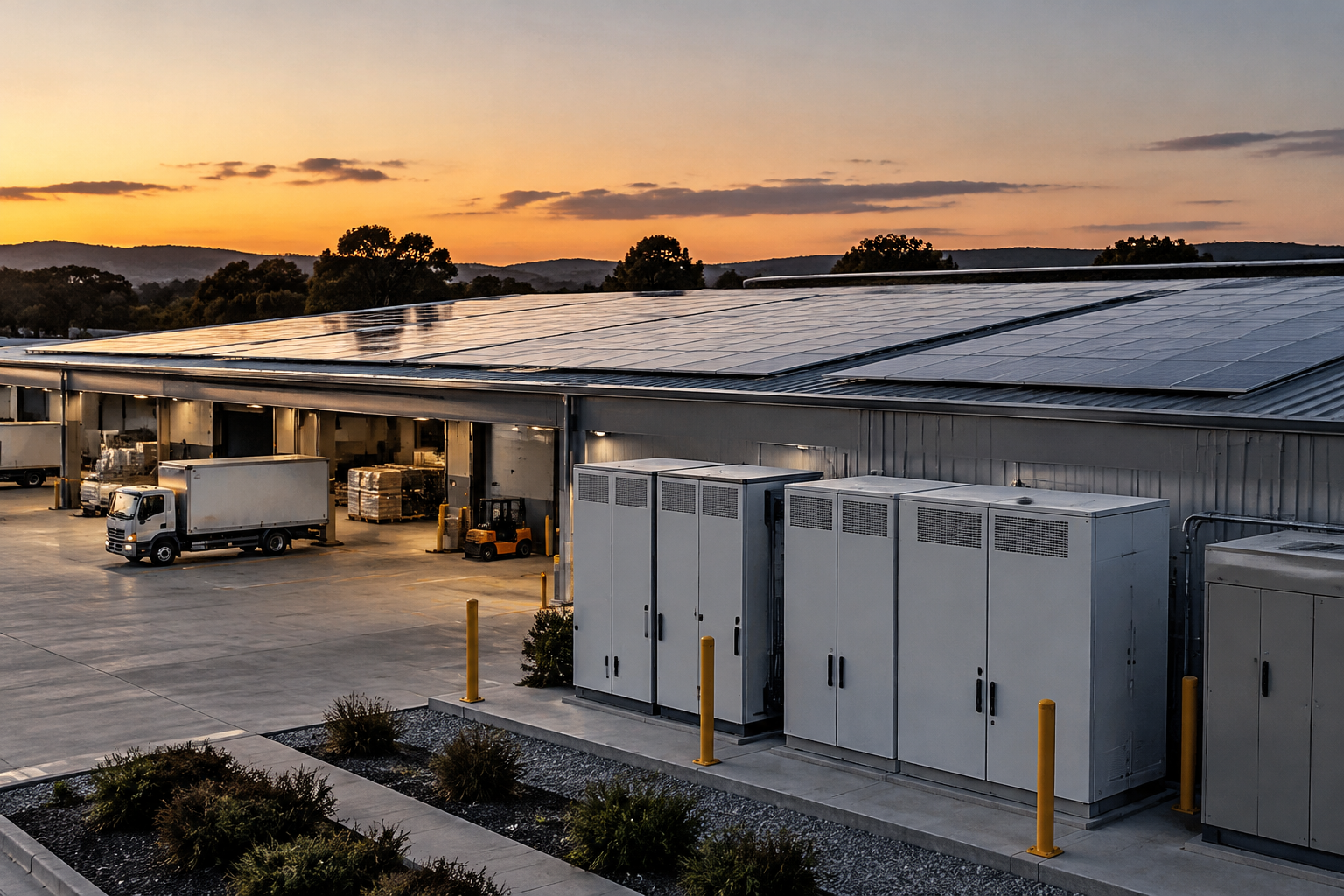
Treat the budget as a choice, not a package
When your NSW business has a limited budget for solar and storage, the question is not simply whether both technologies sound useful. It is which proposed investment deserves the available funds. A battery should not receive an automatic allocation just because solar is also being considered.
This is a resource-allocation decision, rather than a question about buying everything together. Ask what you would give up by directing money towards a battery instead of the solar proposal, or towards solar instead of storage. Keeping some of the budget uncommitted should also remain an option.
Establish a solar option without assuming bigger is better
Australian Government guidance says solar size depends on electricity use and its timing, budget, sunny roof space and installation complexity. Start with those factors rather than treating the largest proposed solar system as the preferred destination for your money.
Ask the assessor to explain the solar option that fits your business and why a different size would or would not deserve consideration. For a warehouse, hospitality venue, manufacturer, retailer or medical business, the discussion should use that site's electricity use and timing, not assumptions based on its industry label.
If the solar proposal already reflects those constraints, ask whether allocating more money to solar has a clear purpose. Equally, do not shrink a suitable solar proposal merely to make room for a battery without assessing that trade-off.
Give the battery its own investment case
The NSW Government's battery storage guide says business batteries can help manage energy use and may reduce peak demand charges. It also makes investment assessment central to suitability. Those possible benefits provide questions to investigate, not a reason to reserve part of every solar budget for storage.
Ask what specific energy-management purpose the proposed battery would serve. If reducing peak demand charges is part of the case, request an assessment against your business's applicable tariff. Tariffs vary by customer and location, so a general statement about demand savings is not enough.
If outage supply is being offered as another reason to redirect funds towards storage, confirm that backup configuration is included. A battery supplies outages only when configured for backup; the presence of a battery alone does not establish that benefit.
Keep declining the battery on the table
A reasonable outcome may be to fund an assessed solar option and decline the battery. That is worth considering when the battery's investment case remains unclear, its proposed purpose is vague, or the decision depends on backup that has not been confirmed in the configuration.
The reverse should not become an automatic rule either. Choosing not to buy a battery does not mean all remaining funds should go towards additional solar. Electricity use, timing, sunny roof space and installation complexity still matter.
Avoid judging either option against an assumed end to electricity purchases. Australian Government guidance notes that solar businesses often continue buying grid electricity. Ask each assessment to make its assumptions about continued grid purchases explicit.
Use a budget-allocation checklist
Before committing, work through these questions with your assessor. What budget is actually available? What solar size is supported by electricity use, timing, sunny roof space and installation complexity? What distinct purpose would the battery serve? Has its suitability received an investment assessment?
Then check the trade-off. What changes in the solar proposal if funds move to storage? What battery benefit would be forgone if funds stay with solar? Which tariff applies to the assessment? Are continued grid purchases acknowledged? If backup matters, is it explicitly configured? Is leaving some funds unspent still an acceptable decision?
Ask for a site-specific allocation recommendation
The useful outcome is a reasoned recommendation about where your budget belongs, including reasons to reject either proposed expenditure. For your next step, ask UR Energy for a NSW site assessment that considers your electricity use, tariff, solar constraints and battery investment case before recommending a budget allocation.
Sources & further reading
- Australian Government — Solar for businesses
- NSW Government — Battery storage guide
- Australian Government — Batteries
- Australian Government — Electricity tariffs
AI-assisted editorial content based on the sources above. General information, not a site-specific recommendation. Confirm current requirements before committing to a project.