
Solar + Battery · NSW
Limited Solar Roof Space? Recheck the Case for a Business Battery
A restricted roof should prompt a closer look at your battery plans, not an automatic purchase. Here is how NSW businesses can assess a roof-constrained proposal.
UR Energy editorial team ·
Start with the roof constraint, not the battery offer
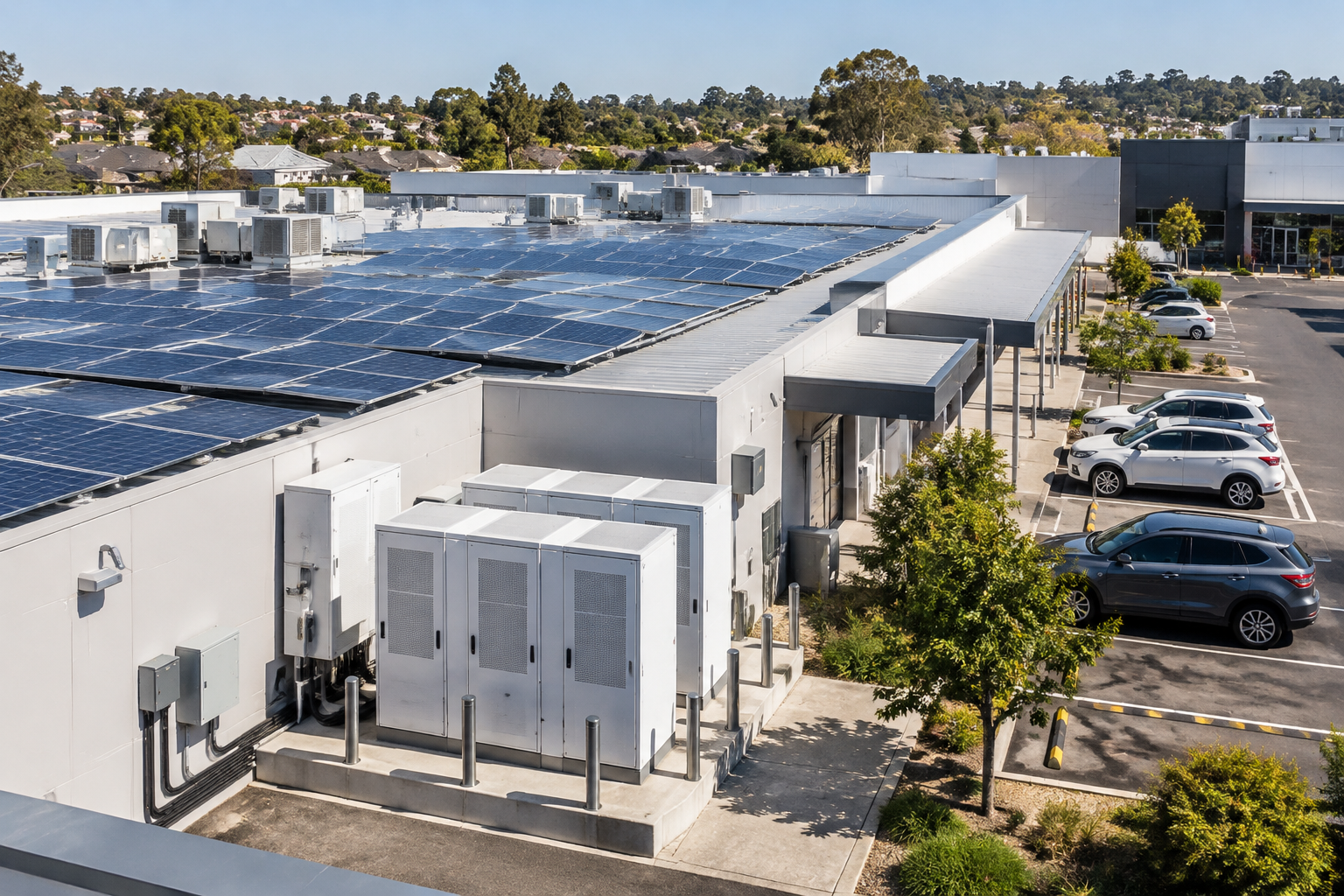
If your NSW business has limited sunny roof space, a solar and battery proposal deserves a specific question: does the battery investment still make sense with the solar system your site can accommodate? Do not let a preferred package become the starting point for the decision.
The Australian Government’s solar guidance identifies electricity use and timing, budget, sunny roof space and installation complexity as factors in solar sizing. For a warehouse, hospitality venue, manufacturer, retailer or medical business, the useful starting point is therefore a site-specific assessment rather than a solar target chosen before those factors are understood.
Separate the roof finding from the investment decision
Ask the assessor to explain how sunny roof space and installation complexity affect the proposed solar size. Which parts of the recommendation reflect your electricity use, and which reflect the site? If the proposal changes after assessment, ask for the reasoning to be recorded clearly.
Then revisit the battery recommendation against that solar proposal. A roof constraint is not, by itself, a reason to buy storage. The NSW Government’s battery storage guide says business batteries can help manage energy use and may reduce peak demand charges, but suitability needs investment assessment. Ask what specific role the battery would serve at your site.
Test the proposal against your actual electricity use
Bring electricity use and its timing into the discussion before accepting the design. Ask the assessor to explain how the proposed solar size relates to those inputs, and how the battery investment has been assessed alongside it. Avoid accepting a general claim that the combination suits your industry.
Use your business type to frame questions, not to substitute for assessment. A hospitality operator might ask whether the proposal reflects its actual operating hours; a manufacturer might ask whether the electricity-use assumptions match its operations. A retailer or medical business can ask the same questions without assuming another site’s recommendation applies.
For leased premises, make clear which roof and installation assumptions still need checking. If those assumptions remain unresolved, ask whether the battery recommendation should also remain provisional.
Do not turn limited solar into a promise of independence
Keep expectations about grid electricity explicit. Australian Government guidance notes that businesses with solar often continue buying electricity from the grid, and that tariffs vary by customer and location. Ask what ongoing grid purchases the assessment assumes rather than treating a solar and battery package as a promise to remove them.
Backup is a separate point to verify. A battery supplies electricity during an outage only when configured for backup. If backup forms part of your reason for investing, ask whether the proposed configuration includes it. Neither a roof constraint nor the presence of a battery establishes that your business will have outage supply.
Use a concrete roof-constrained decision checklist
Before deciding, check that you can answer these questions: What sunny roof space has been assessed? How does installation complexity affect the solar proposal? What electricity-use and timing information supports it? What budget has the design been assessed against?
For the battery, check: What energy-management purpose is proposed? If peak demand charge reductions are suggested, how have they been assessed for your tariff? What grid purchases remain in the assessment? Is backup included or excluded? Would the recommendation change if the assessed solar size changed?
Pause or decline the purchase if the investment case remains unclear, depends on unresolved roof assumptions, or relies on backup that has not been specified. Limited roof space alone does not establish that storage is a suitable investment.
Take the site questions to UR Energy
Your next step is to ask UR Energy about a NSW site assessment focused on sunny roof space, installation complexity, electricity use and timing, budget and tariff. Request a battery recommendation conditional on those findings, with its purpose and any backup configuration clearly stated.
Sources & further reading
- Australian Government — Solar for businesses
- NSW Government — Battery storage guide
- Australian Government — Batteries
- Australian Government — Electricity tariffs
AI-assisted editorial content based on the sources above. General information, not a site-specific recommendation. Confirm current requirements before committing to a project.