
Solar + Battery · NSW
Less Grid Electricity Is Not the Same as a Better Battery Investment
Want your NSW business to rely less on grid electricity? Separate that ambition from the investment case before committing to a commercial battery.
UR Energy editorial team ·
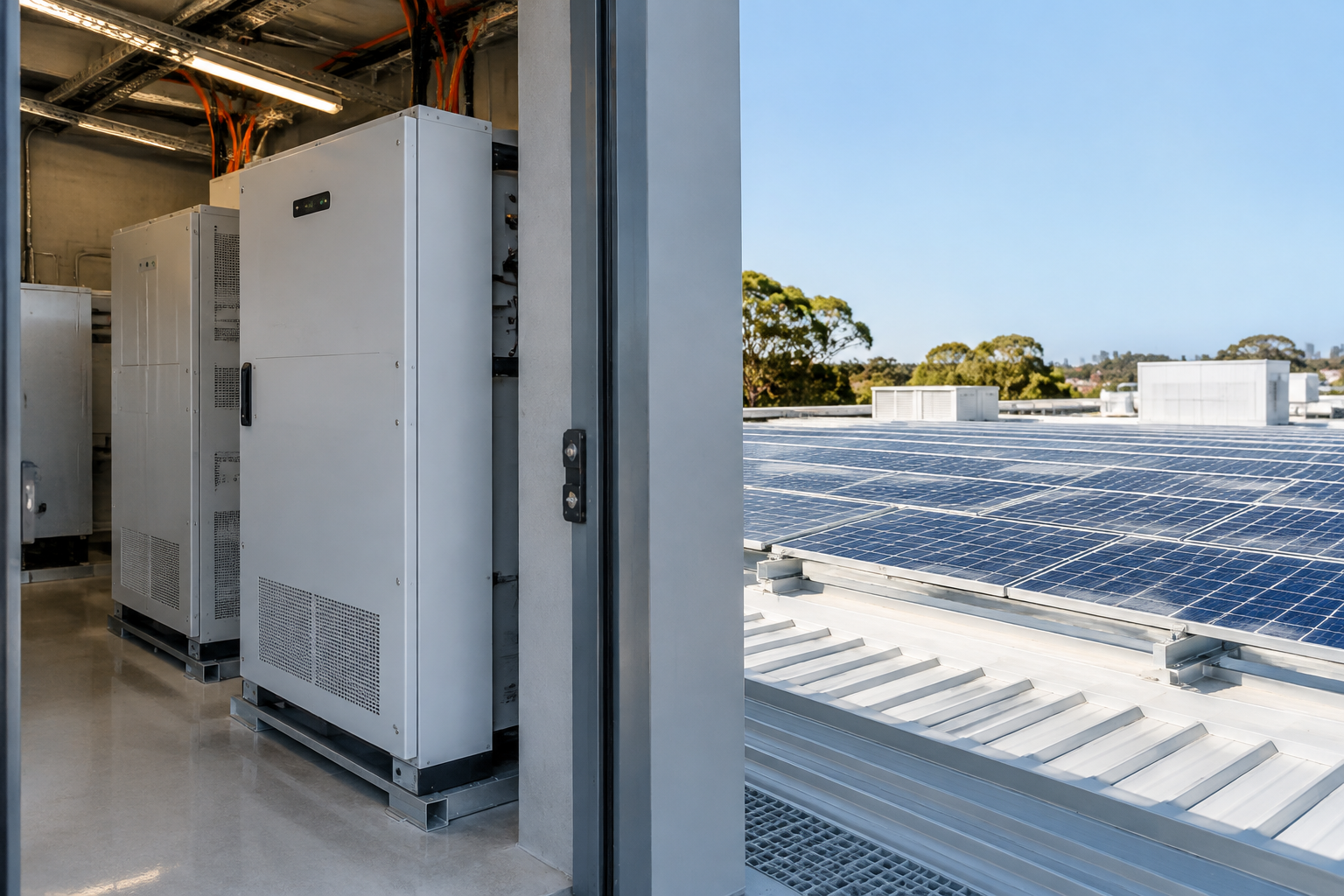
Make reduced grid reliance a question, not a promise
For a NSW business considering solar and a battery, buying less electricity from the grid can sound like a complete objective. It is a useful starting point, but it does not answer the purchase question: would the proposed investment deliver something your business values enough to justify the commitment?
Australian Government guidance notes that businesses with solar often continue buying grid electricity. Treat any expectation of eliminating grid purchases as something to examine, not a default outcome. Before discussing equipment, ask what buying less grid electricity is meant to achieve for your warehouse, hospitality venue, manufacturing operation, shop or medical premises.
Separate grid purchases, demand charges and backup
Three ambitions can become tangled together: buying less grid electricity, managing peak demand charges and keeping selected activities supplied during an outage. Do not accept one as evidence that the other two have been addressed. Ask for each intended outcome to be explained separately in the proposed design.
NSW Government guidance says business batteries can help manage energy use and may reduce peak demand charges, but suitability needs an investment assessment. Australian Government guidance also makes clear that a battery supplies outages only when configured for backup. Neither benefit should be assumed simply because a proposal includes a battery.
Keep the grid in the proposed operating picture
Ask the assessment to describe the proposed role of grid electricity rather than presenting it only as something to remove. When would the business still expect to buy electricity? What information supports that expectation? If continued grid purchases are acceptable, what result would make the battery worthwhile?
Tariffs vary by customer and location, so the investment assessment should use the electricity arrangements relevant to your NSW premises. A general ambition to buy less does not establish the financial value of doing so. Request a clear explanation of how the proposed energy-management outcome connects to your business's tariff, without treating reduced grid purchases as a guaranteed financial result.
Do not let the ambition dictate the solar design
If solar is part of the proposal, avoid starting with a demand to cover every electricity need. Government guidance identifies electricity use and its timing, budget, sunny roof space and installation complexity as factors in solar sizing. These should shape the assessment rather than be treated as obstacles to a predetermined answer.
Ask whether the proposed solar size remains appropriate when continued grid purchases are allowed for. Then ask what role the battery would play within that design. If the explanation depends entirely on an untested expectation of eliminating grid electricity, pause the purchase discussion and request a more clearly supported assessment.
Use a concrete decision checklist
Purpose check: Can you state why reduced grid reliance matters to the business, without using it as a substitute for a financial assessment or a backup requirement?
Grid check: Does the proposal explicitly acknowledge expected ongoing grid purchases and explain the assumptions behind them?
Investment check: Has battery suitability been assessed against your intended energy-management outcome and the tariff relevant to the site?
Design check: If solar is included, have electricity use, timing, budget, sunny roof space and installation complexity been considered? If backup is required, is the necessary configuration explicitly addressed?
Stop check: Would you still want the investment if grid electricity remained part of normal operations? If not, do not proceed until that expectation has been examined.
Give yourself permission not to buy
A battery is not justified merely because reducing grid reliance sounds desirable. Reasons to defer include an unclear business objective, an investment assessment that does not support the proposed outcome, or backup expectations that the configuration does not address.
For your next step, ask UR Energy for a NSW site assessment that treats continued grid electricity purchases as an explicit consideration and tests whether solar and a battery fit your site's requirements.
Sources & further reading
- Australian Government — Solar for businesses
- NSW Government — Battery storage guide
- Australian Government — Batteries
- Australian Government — Electricity tariffs
AI-assisted editorial content based on the sources above. General information, not a site-specific recommendation. Confirm current requirements before committing to a project.