
Solar + Battery · NSW
Does Your Business Solar Plan Really Need a Battery?
A battery should not be a condition of considering business solar. Separate the two decisions and ask whether each has a sound case at your NSW site.
UR Energy editorial team ·
Question the assumed dependency
When a NSW business considers solar, a battery can quickly become part of the conversation. The important question is not simply whether the technologies belong in one proposal. It is whether the solar decision genuinely depends on buying a battery, or whether that dependency has been assumed.
Treat “we need both” as a proposition to assess, not a starting requirement. Business batteries can help manage energy use and may reduce peak demand charges, but suitability needs an investment assessment. Those potential benefits do not, by themselves, establish that your business should rule out solar without storage.
Build a solar-only option worth assessing
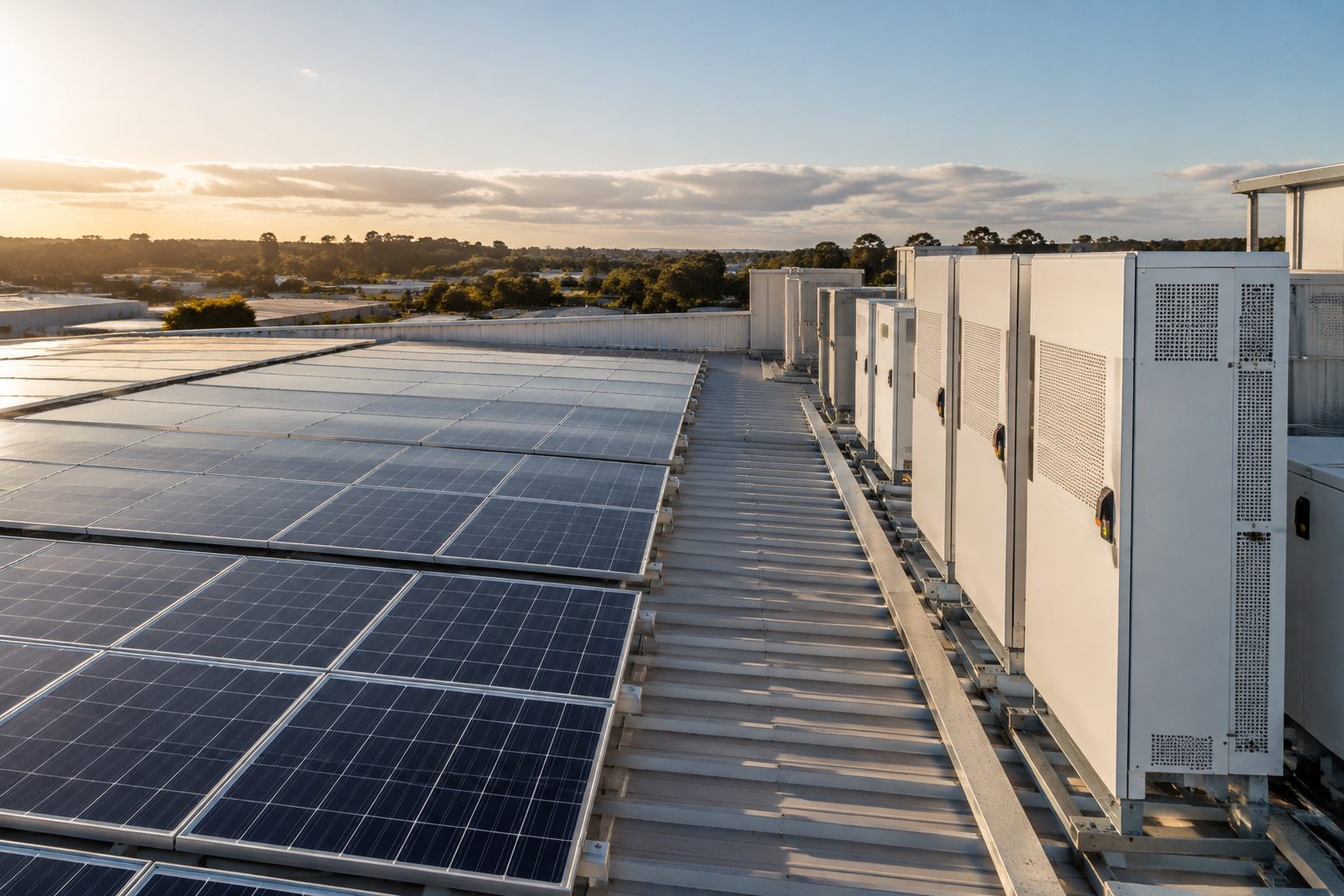
Ask what a solar proposal would look like if a battery were not included. Australian Government guidance identifies electricity use and its timing, budget, sunny roof space and installation complexity as factors in solar sizing. Keep those factors visible rather than letting an assumed battery purchase define the whole project.
For a warehouse, hospitality venue, manufacturer, retailer or medical business, the practical questions are site-specific: when does the business use electricity, what budget is available, and what roof and installation considerations need assessment? A solar-only option should be examined on those terms. It should not be dismissed merely because it lacks a battery.
Do not make zero grid purchases the entry test
Solar businesses often continue buying grid electricity. Tariffs also vary by customer and location. If a solar-only proposal includes ongoing grid purchases, that is not, on its own, a reason to declare the proposal incomplete or make a battery compulsory.
Ask the assessor to explain the solar-only arrangement against the electricity tariff relevant to your site. Then ask what the battery would change. Keep the question focused on the investment: would the proposed change justify adding storage? Avoid substituting a different test, such as whether the combined proposal appears to eliminate reliance on grid purchases.
Identify any genuine battery requirement
There may be a specific business objective behind the request for storage. Name it clearly. Is the battery being considered to manage energy use, potentially reduce peak demand charges, or provide configured backup? Ask which objective actually makes storage necessary to the proposed arrangement, and which is simply an additional possibility.
If backup is the requirement, make that explicit in the assessment. A battery supplies electricity during outages only when configured for backup; not every battery provides it. Do not let the word “battery” stand in for an agreed backup requirement. Equally, do not treat a backup objective as proof that the solar investment must depend on it.
Use a decision checklist that allows separate answers
Before approval, work through this checklist and record an answer to each question. Has solar been assessed without a battery? Does its proposed size reflect electricity use and timing, budget, sunny roof space and installation complexity? Have ongoing grid purchases and the relevant tariff been considered?
Then check the claimed dependency. What specific purpose would the battery serve? Has its suitability received an investment assessment? If backup is required, is backup configuration expressly included? What evidence supports the statement that solar should not proceed without storage?
Keep separate outcomes available. You might decide to investigate both technologies further, consider solar without storage, or proceed with neither. Reasons not to buy the battery include an unclear purpose, an investment assessment that does not support it, or unresolved backup requirements.
Request an assessment without a compulsory bundle
The useful outcome is not a predetermined package. It is a clear explanation of whether each proposed investment stands up, and whether any dependency between them is justified. A decision against storage should not automatically become a decision against solar.
For your next step, ask UR Energy for a NSW site assessment that examines a solar-only option and, where relevant, a separately justified battery option against your electricity use, tariff, budget and site considerations.
Sources & further reading
- Australian Government — Solar for businesses
- NSW Government — Battery storage guide
- Australian Government — Batteries
- Australian Government — Electricity tariffs
AI-assisted editorial content based on the sources above. General information, not a site-specific recommendation. Confirm current requirements before committing to a project.