
Solar + Battery · NSW
Does Your Battery Proposal Depend on Solar You Haven’t Approved?
If a commercial battery proposal relies on unapproved solar, separate the assumptions before committing. A practical decision guide for NSW business sites.
UR Energy editorial team ·
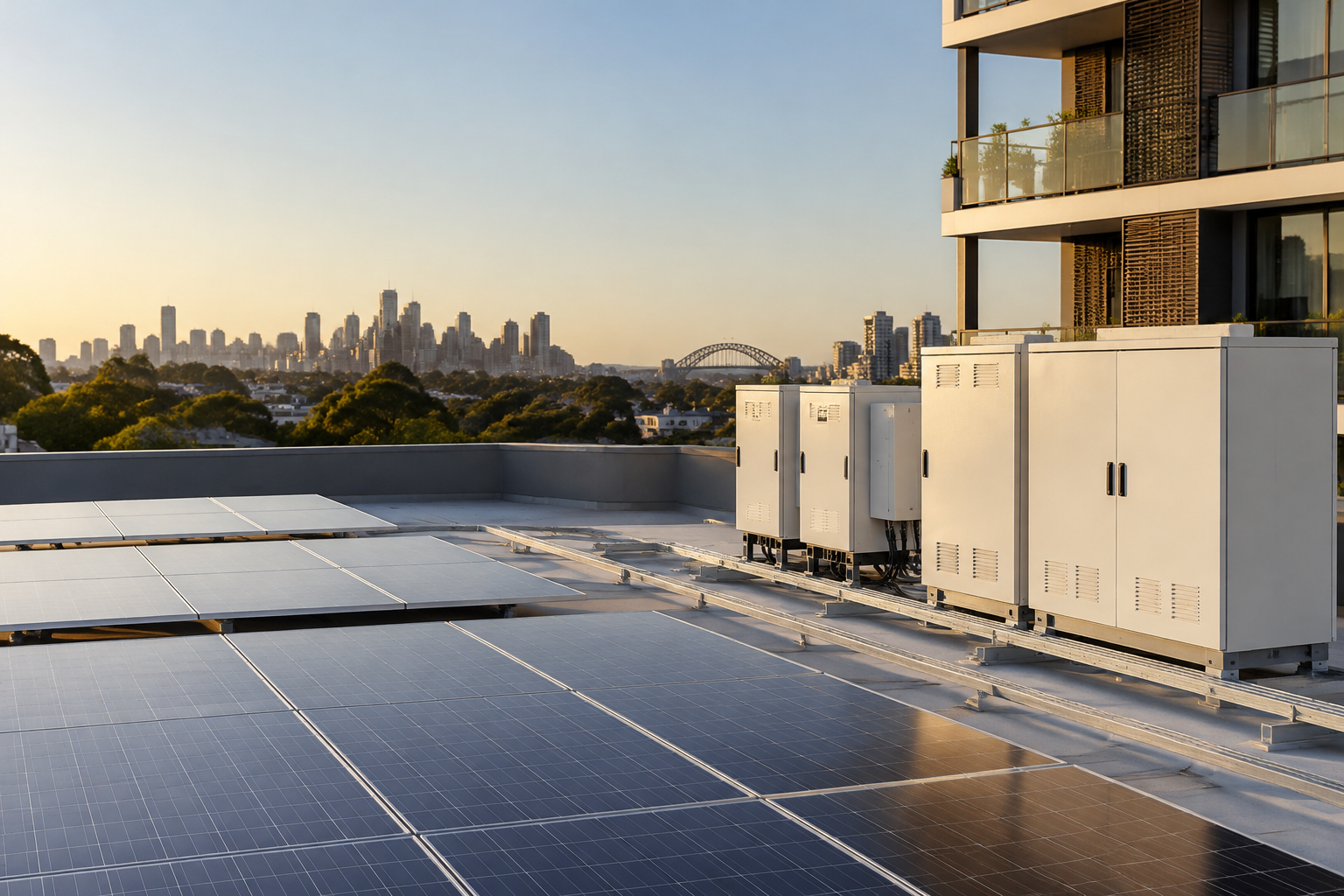
Identify the dependency before approving the battery
A battery proposal deserves closer scrutiny when its investment case assumes a solar system your business has not yet approved. The question is not simply whether solar and a battery belong together. It is whether you are being asked to commit to one investment before resolving another investment on which the proposal depends.
For a NSW warehouse, hospitality venue, manufacturer, retailer or medical business, start with a direct question: which parts of this battery recommendation depend on the proposed solar proceeding? Ask for those dependencies to be stated plainly, rather than leaving an indicative solar design embedded in the battery assessment.
Treat the proposed solar design as provisional
Australian Government guidance says business solar size depends on electricity use and its timing, budget, sunny roof space and installation complexity. Until those matters have been assessed for your site, avoid treating a proposed solar size as a settled input to the battery decision.
Ask whether the solar design used in the battery proposal reflects your business’s circumstances or is still an option under consideration. What happens to the battery recommendation if the approved solar system is different? Would the investment assessment need to be repeated? These are questions to resolve before commitment, not assumptions to leave for later.
At a leased commercial site, make the same distinction: solar included in a discussion is not necessarily solar your business has decided to purchase.
Request an assessment without the assumed solar
Ask the proposal provider to explain the battery case under your existing electricity arrangement, separately from the case that includes the proposed solar. This does not mean the battery must make sense without solar. It means you should know whether solar is essential to the recommendation.
NSW Government guidance says business batteries can help manage energy use and may reduce peak demand charges, but suitability requires investment assessment. Neither possibility establishes that your particular battery proposal is worthwhile without the solar assumed in it.
Keep electricity purchasing assumptions visible too. Tariffs vary by customer and location, and businesses with solar often continue buying grid electricity. Ask which tariff and grid electricity assumptions belong to each version of the assessment.
Know when not to commit
Do not approve the battery on the strength of a combined assessment if the solar component remains unresolved and the battery’s suitability depends on it. A reasonable outcome is to pause the battery decision until the solar design and budget are clear enough to assess together.
There is also a reason not to buy if the battery does not support a satisfactory investment case without solar and your business decides against solar. Do not preserve the purchase simply because it was previously part of a package.
Nor should backup become an untested fallback justification. Australian Government guidance states that a battery supplies power during outages only when configured for backup. If backup enters the discussion, ask for that configuration to be addressed explicitly.
Use a dependency checklist
Before making the decision, record answers to these questions: Has the proposed solar been approved? Has its size been assessed against electricity use and timing, budget, sunny roof space and installation complexity? Which battery benefits depend on that solar design?
Then ask: Is there a separate battery investment assessment without the proposed solar? Are tariff and continuing grid electricity assumptions clear? If the solar proposal changes or does not proceed, will the battery recommendation be reassessed before purchase? Is any claimed outage supply tied to an explicit backup configuration?
Resolve the solar dependency at your NSW site
Your next step is a NSW site assessment focused on this dependency. Bring your electricity information, proposed solar design and battery proposal, and ask the assessor to distinguish confirmed inputs from unresolved assumptions. Use that assessment to decide whether to proceed, revise the proposal or leave the battery unpurchased.
Sources & further reading
- Australian Government — Solar for businesses
- NSW Government — Battery storage guide
- Australian Government — Batteries
- Australian Government — Electricity tariffs
AI-assisted editorial content based on the sources above. General information, not a site-specific recommendation. Confirm current requirements before committing to a project.