
Commercial Battery · NSW
Comparing Commercial Battery Proposals: What NSW Businesses Should Ask
Comparing battery proposals for your NSW business? Look beyond the recommendation and test the assumptions, investment case and reasons to hold off.
UR Energy editorial team ·
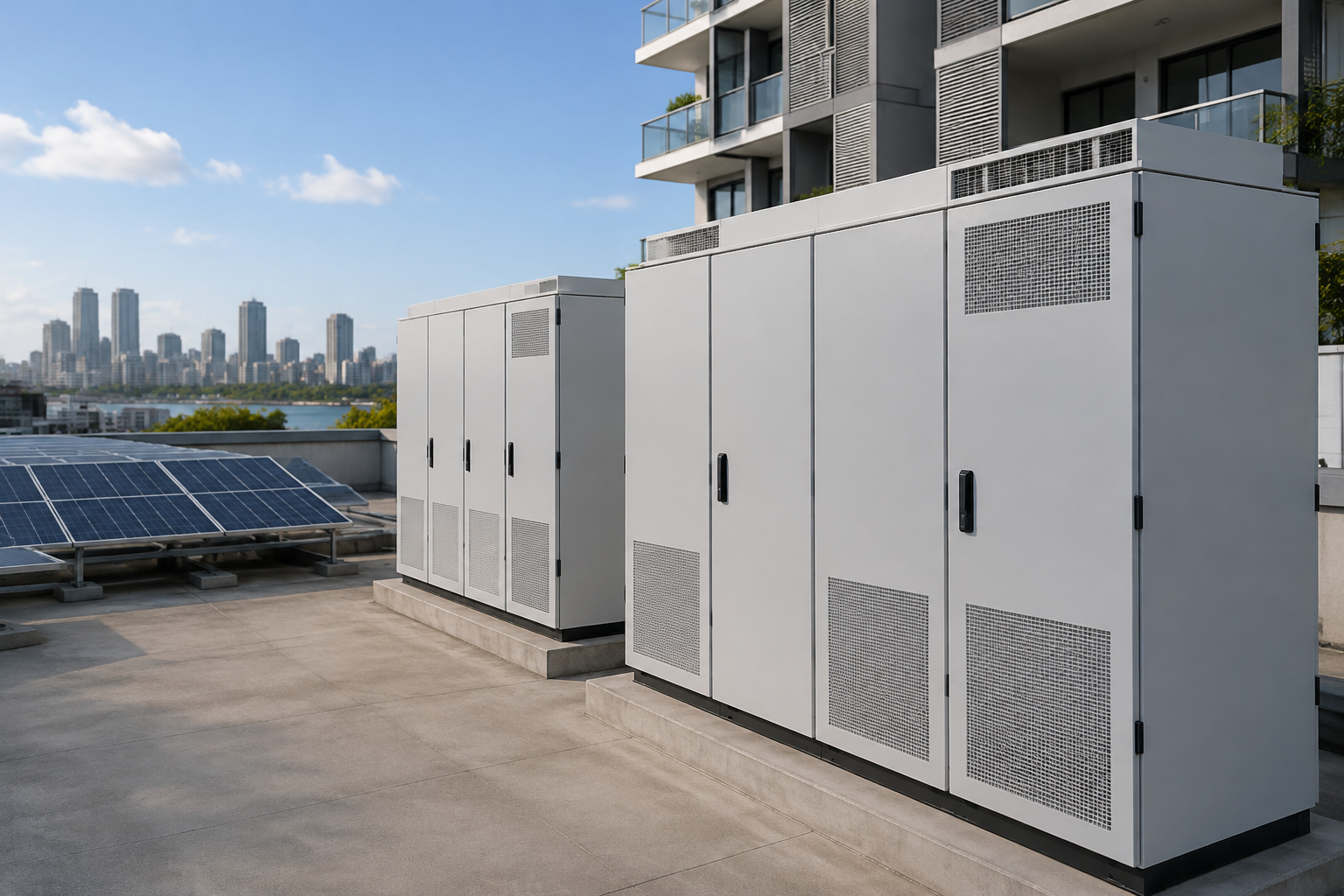
Compare the reasoning, not just the recommendation
When your business receives two battery proposals, the useful question is not simply which one looks more attractive. It is whether both recommendations address the same business need and explain their assumptions clearly enough for you to make an investment decision.
Business batteries can help manage energy use and may reduce peak demand charges, but suitability needs an investment assessment. For a NSW warehouse, hospitality venue, manufacturer, retailer or medical business, a proposal should therefore be something to test, not a conclusion to accept. Start by asking each provider to explain why buying a battery is preferable to holding off.
Give every provider the same decision brief
Before comparing proposals, write a short brief describing what you want assessed. Are you considering better management of electricity use, possible peak demand charge reductions, or a specifically configured backup arrangement? You can ask about several outcomes, but request a separate explanation for each rather than one broad promise of value.
Ask providers to work from the same information about your electricity use, its timing and your tariff. Tariffs vary by customer and location, so do not accept another business’s circumstances as a substitute for your own. If solar is included, also set out your budget and ask how sunny roof space and installation complexity affect the solar recommendation.
Separate supported benefits from assumptions
Ask each provider to distinguish what they know about your site from what they have assumed. A useful comparison question is: “Which parts of this recommendation could change once our site and electricity information are assessed?” That keeps uncertainty visible rather than allowing an early recommendation to appear settled.
For a proposal that includes solar, ask how continued grid purchases have been treated. Businesses with solar often still buy electricity from the grid. For any proposal mentioning outages, request explicit confirmation that backup is part of the proposed configuration. A battery supplies power during outages only when configured for backup; the presence of a battery alone is not confirmation.
Ask for the case against buying
A useful investment assessment should leave room for a decision not to proceed. Ask what would make the provider recommend no battery, a revised proposal or further assessment. If the investment case depends on possible peak demand charge reductions, ask how the recommendation would change if those reductions were not supported by your assessment.
Reasons to hold off include an unclear investment case, unresolved assumptions about your electricity use or tariff, and an outage expectation that the proposed configuration does not address. Where solar is also proposed, unresolved questions about budget, sunny roof space or installation complexity are further reasons to seek clarification rather than commit.
Use a concrete proposal comparison checklist
For each proposal, record answers to these questions: What business outcome is being assessed? What electricity-use information and tariff underpin the recommendation? Which statements are assumptions? How has the investment been assessed? What information remains outstanding? Mark each answer as explained, unresolved or not applicable.
Then check the conditional elements: Are any peak demand charge reductions presented as possible rather than guaranteed? If outages matter, is backup configuration explicitly included? If solar is included, does the recommendation address electricity use and timing, budget, sunny roof space and installation complexity? Finally, ask whether the assessment supports buying now, revising the proposal or not buying.
Resolve differences before making the decision
If proposals disagree, ask providers to explain the different assumptions rather than choosing the more optimistic recommendation. An unresolved answer is a reason for another question, not evidence of a benefit. Keep the option of no purchase alongside the purchase options.
For your next step, ask UR Energy for a NSW site assessment focused on the unresolved items in your comparison. Bring your proposals, electricity-use information, tariff details and decision checklist so the discussion can test the recommendation against your business’s circumstances.
Sources & further reading
- Australian Government — Solar for businesses
- NSW Government — Battery storage guide
- Australian Government — Batteries
- Australian Government — Electricity tariffs
AI-assisted editorial content based on the sources above. General information, not a site-specific recommendation. Confirm current requirements before committing to a project.