
Commercial Battery · NSW
Can Your NSW Business Accommodate the Proposed Battery Installation?
A commercial battery needs more than an investment case. Ask whether the proposed installation fits your NSW site’s operating requirements before approving the purchase.
UR Energy editorial team ·
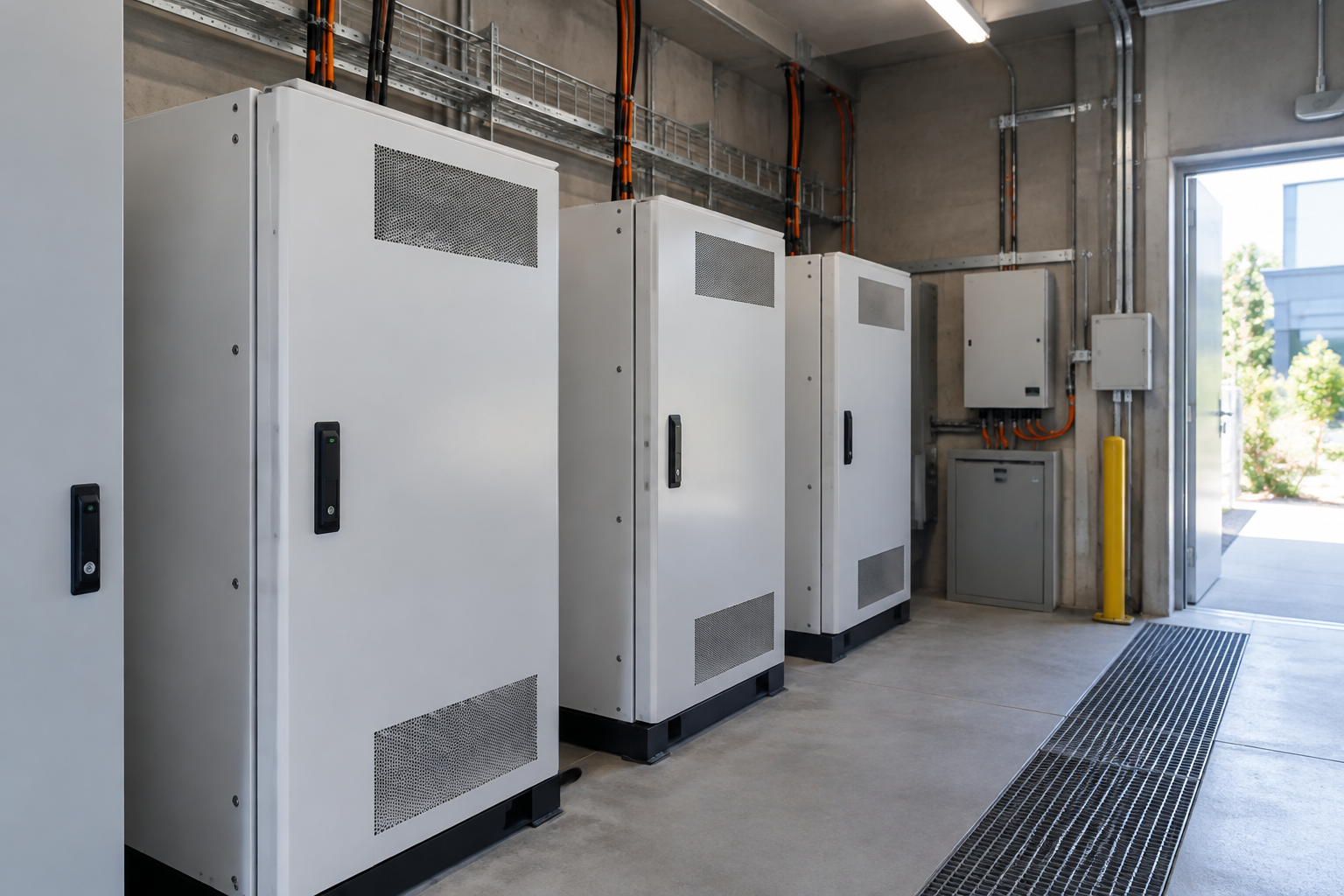
Assess the installation, not just the intended benefit
A commercial battery may help your business manage energy use and may reduce peak demand charges. Its suitability still needs an investment assessment. Alongside that assessment, ask a separate question: can your business accept the proposed installation arrangements at this site?
This is not about assuming installation will be difficult. It is about avoiding approval while important practical questions remain unanswered. For a warehouse, hospitality venue, manufacturer, retailer or medical business, the proposal should be considered against the activities the business needs to continue. An attractive energy objective does not, by itself, answer those site questions.
Define what the business needs to protect
Before reviewing installation arrangements, write down your operational requirements. Which areas need to remain available? Are there periods when your business would not accept work taking place? Which activities could be rescheduled, and which should be treated as fixed requirements? Frame these as questions for assessment, rather than assumptions about what an installation involves.
Be specific enough to get useful answers. Instead of saying that the business cannot tolerate disruption, identify what would be unacceptable and ask whether the proposed approach accommodates it. For leased NSW premises, also ask who needs to review the proposed use of space and installation arrangements before your business commits.
Ask for a site-specific explanation
Ask the assessor to explain the proposed location and installation approach in relation to your operating requirements. What would your business need to make available? What arrangements would need agreement? Which parts of the proposal have been assessed at the site, and which remain provisional? Do not treat an unanswered question as either proof of a problem or confirmation that everything is straightforward.
If solar is included, assess its installation considerations explicitly. Australian Government guidance says solar size depends on electricity use and timing, budget, sunny roof space and installation complexity. Ask how those factors shaped the solar proposal, rather than letting a combined package obscure the reasoning behind each part.
Keep site acceptance separate from the energy case
A proposal that fits your operating requirements still needs a sound battery investment assessment. Conversely, a potentially useful battery should not receive automatic approval if the installation arrangements remain unacceptable or unclear. Treat these as separate questions that both need satisfactory answers.
Keep the intended benefit precise. If reducing peak demand charges is the purpose, ask whether the assessment supports that possibility for your business. Tariffs vary by customer and location, and businesses with solar often continue buying grid electricity. If outage supply is part of the brief, confirm backup configuration explicitly: a battery only supplies outages when configured for backup. Do not count it as an automatic benefit.
Use a concrete approval checklist
Record answers to these questions before approving the purchase: Is the proposed installation location clear? Have your non-negotiable operating requirements been documented? Has the proposed approach been checked against them? Have relevant site decision-makers reviewed the arrangements? Are unresolved questions assigned to someone for an answer? Does the battery investment assessment still support proceeding?
For a solar and battery proposal, add a check that solar sizing accounts for use and timing, budget, sunny roof space and installation complexity. Record each answer as confirmed, unresolved or unacceptable, with a brief explanation. This creates a practical decision record without pretending that every site question can be settled from a general product proposal.
Be prepared to decline an unsuitable proposal
Reasons not to buy include installation arrangements that do not meet your operating requirements, unresolved site questions you are not prepared to accept, or an investment assessment that does not justify proceeding. You can request a revised proposal without assuming a suitable alternative will necessarily emerge.
For your next step, ask UR Energy for a NSW site assessment focused on the proposed installation arrangements. Bring your operating requirements, electricity information and any relevant premises questions so the review can consider both site acceptance and the battery investment case.
Sources & further reading
- Australian Government — Solar for businesses
- NSW Government — Battery storage guide
- Australian Government — Batteries
- Australian Government — Electricity tariffs
AI-assisted editorial content based on the sources above. General information, not a site-specific recommendation. Confirm current requirements before committing to a project.