
Commercial Battery · NSW
Can Your Commercial Battery Investment Withstand a Weaker Outcome?
Before committing to a commercial battery, test whether the investment still makes sense if the expected benefits are smaller than hoped for your NSW business.
UR Energy editorial team ·
Assess the less favourable case, not just the preferred one
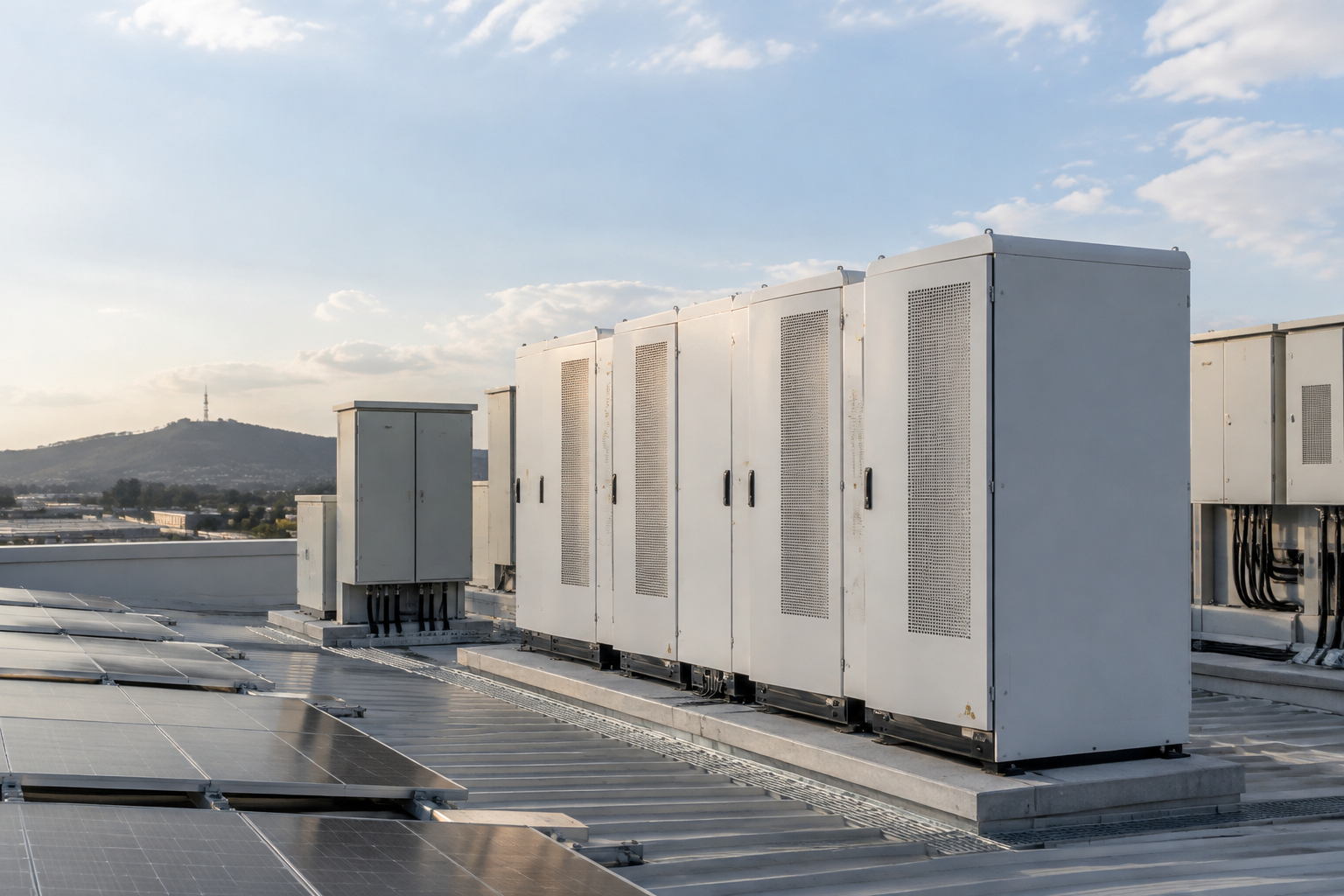
A commercial battery proposal can look appealing when every expected benefit is included. A different question deserves attention before purchase: would your business still consider the investment worthwhile if those benefits were smaller than expected? For a NSW warehouse, hospitality venue, manufacturer, retailer or medical business, this is a useful way to challenge the investment without assuming it will fail.
The NSW Government’s battery storage guide says business batteries can help manage energy use and may reduce peak demand charges, but suitability needs investment assessment. Treat the less favourable case as part of that assessment, rather than accepting the preferred outcome as a promise.
Ask what happens if demand-charge benefits disappoint
If the proposal relies on reducing peak demand charges, ask the assessor to explain that part of the case separately. What benefit is being assumed? What supports the assumption for your business? Then ask for a second assessment in which that benefit is smaller, and another in which it contributes nothing to the purchase decision.
These are decision tests, not predictions about battery performance. Their purpose is to show how much of your willingness to invest depends on one conditional benefit. If removing it leaves no convincing reason to buy, pause until the demand-management case is sufficiently clear for your business.
Keep grid electricity purchases in the picture
Australian Government guidance notes that electricity tariffs vary by customer and location, and businesses with solar often continue buying grid electricity. Your assessment should therefore address the electricity your business would still purchase, rather than treating a solar-and-battery proposal as an automatic end to grid bills.
Ask whether the investment remains acceptable under a less favourable estimate of the proposed financial benefit. Which tariff assumptions are being used, and are they relevant to your customer circumstances and NSW location? Avoid substituting another business’s apparent result for your own assessment. If the proposal cannot explain its assumptions clearly, defer the commitment rather than filling the gaps with optimism.
Do not let backup rescue an unsupported financial case
When the financial case looks weaker, it can be tempting to justify the purchase by saying the battery will also provide backup. Australian Government guidance is clear: a battery supplies power during outages only when configured for backup. That capability must not be assumed.
If backup is offered as another reason to proceed, ask whether it is actually part of the proposed configuration and whether your business wants it independently of the financial benefit. If it is not included, leave it out of the decision. If it is included but does not matter to your business, do not use it to make an otherwise unconvincing investment feel worthwhile.
Use a concrete downside checklist
Before approving a purchase, write answers to these questions in one decision record. What is the main benefit being assessed? Which benefits are conditional? What happens to your decision if peak demand-charge reductions are smaller than expected? Would you still proceed if that benefit were absent? What grid electricity purchases remain in the assessment? Is any claimed backup capability explicitly configured?
For a combined solar-and-battery proposal, also ask whether the solar size reflects electricity use and timing, budget, sunny roof space and installation complexity. Would you still want the proposed solar scope if the battery case weakened? Keep that question open rather than assuming both parts must be approved together.
Make room for a decision not to buy
A sound assessment can end with a decision to wait or not proceed. Reasons include an investment that only feels acceptable under the most favourable assumptions, unresolved questions about potential demand-charge reductions, or reliance on backup that is not configured. None requires dismissing batteries generally; each is a reason to question this purchase.
For your next step, ask UR Energy for a NSW site assessment that considers your electricity use, tariff circumstances and proposed battery purpose. Request both the preferred investment case and a clearly explained less favourable case before deciding whether to commit.
Sources & further reading
- Australian Government — Solar for businesses
- NSW Government — Battery storage guide
- Australian Government — Batteries
- Australian Government — Electricity tariffs
AI-assisted editorial content based on the sources above. General information, not a site-specific recommendation. Confirm current requirements before committing to a project.