
Commercial Battery · NSW
Business Battery Backup: Make the Configuration Part of the Purchase Decision
Buying a battery for business backup? NSW businesses should make backup configuration an explicit purchase question, rather than assume every battery provides it.
UR Energy editorial team ·
Turn the backup assumption into a question
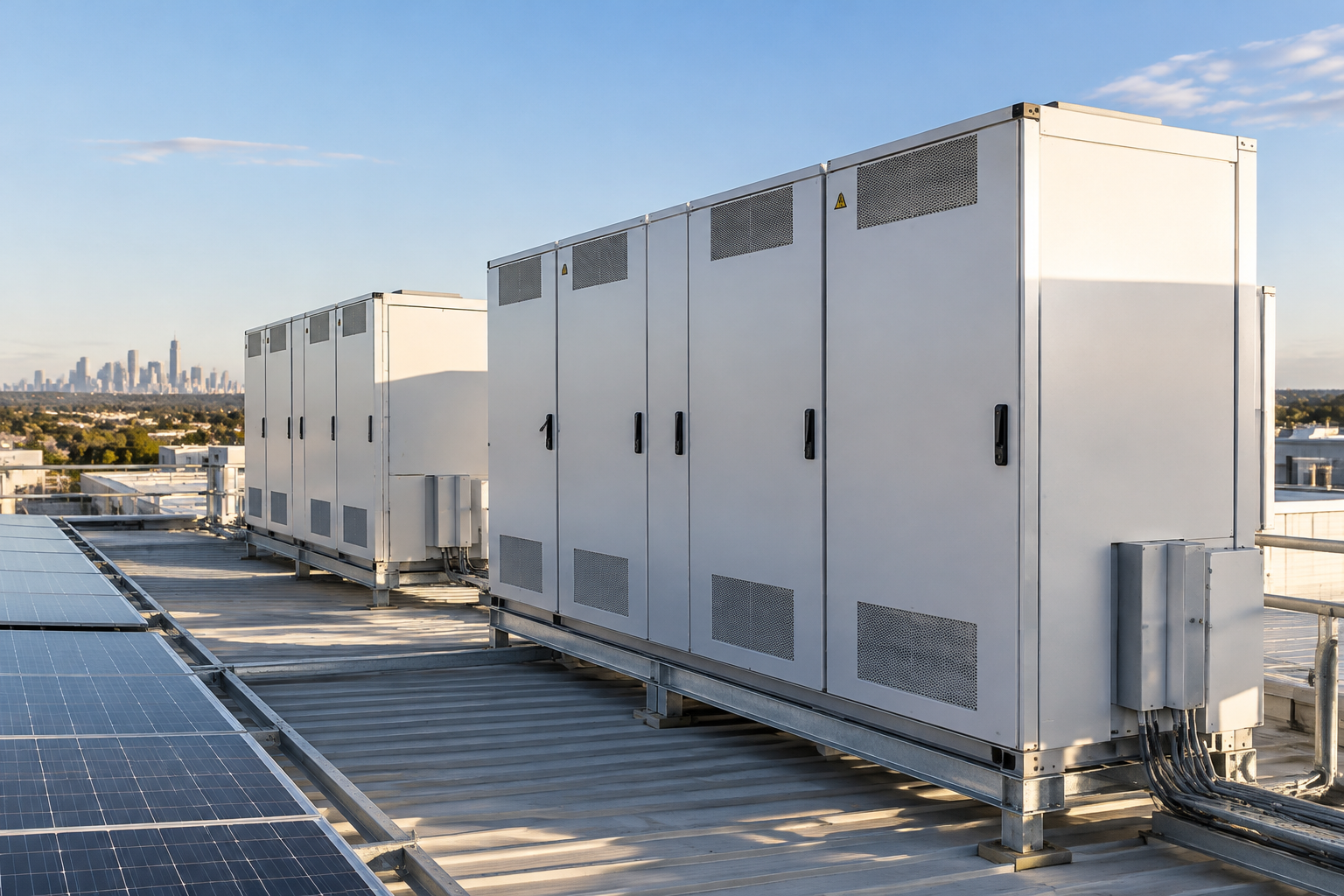
If outage support is part of your reason for considering a commercial battery, start with one direct question: is the proposed battery configured to provide backup? Australian Government guidance is clear that a battery supplies power during outages only when configured for backup. Owning a battery and having backup are not automatically the same thing.
For a NSW warehouse, hospitality venue, manufacturer, retailer or medical business, this distinction belongs in the purchase decision. Rather than treating backup as an implied feature, ask how the proposal addresses it. The aim is not to choose which activities matter most during an outage; it is to establish whether the proposed purchase actually includes the function you are relying on.
Make the proposal answer explicitly
Ask the provider to state whether backup is included in the proposed configuration, excluded, or still subject to assessment. If the answer is conditional, ask what remains unresolved before you can make an informed decision. Avoid filling gaps with your own assumptions about what a business battery should do.
A useful written question is: ‘We are considering this investment partly for outage support. Does this proposal include a battery configured for backup, and what should we understand about the proposed arrangement?’ Ask for an explanation that connects directly to your site and purchasing brief, rather than a general description of batteries.
Keep other battery benefits separate
NSW Government guidance says business batteries can help manage energy use and may reduce peak demand charges, but suitability requires investment assessment. Those potential benefits do not establish that a proposed battery will provide backup. Equally, confirmation of backup configuration does not establish that the investment makes financial sense.
Ask for the investment assessment to distinguish outage support from energy-management expectations. Tariffs vary by customer and location, so do not accept a general claim about demand-charge reductions as an answer to a backup question. If the proposal also includes solar, remember that solar businesses often continue buying grid electricity.
Know when not to proceed
If backup is essential to your reason for buying and the proposal does not include backup configuration, that is a reason not to purchase that proposal. If the configuration remains unclear, pause rather than assume the uncertainty will resolve itself after you commit. A promise you cannot clearly identify should not carry the investment decision.
There may also be a reason not to buy even when backup is explicitly included. If the investment assessment does not support the expenditure, or your business cannot justify the budget on the stated benefits, reconsider. A battery may suit some business objectives without being the right purchase for your site.
Use a backup confirmation checklist
Before approving expenditure, record answers to these questions: Is outage support part of our purchasing reason? Does the proposal explicitly include backup configuration? What conditions or unanswered questions remain? Has the provider explained the proposed arrangement against our site requirements? Is that explanation clear enough for the person approving the purchase?
Then check the investment separately: Have energy-management benefits been assessed rather than assumed? Have any peak-demand expectations been considered against our tariff? Would we still proceed if those potential benefits were not sufficient to justify the investment? If solar is included, has its size been considered against electricity use and timing, budget, sunny roof space and installation complexity?
Take the unresolved questions to your NSW site assessment
Keep the purchasing brief simple: state whether backup is required, identify what the proposal confirms, and list what still needs an answer. This gives the assessment a specific purpose without assuming the outcome will be a battery purchase.
For your next step, ask UR Energy about a NSW site assessment focused on the proposed backup configuration and investment suitability. Bring your proposal, electricity tariff information and completed checklist so the discussion can address the decision you actually need to make.
Sources & further reading
- Australian Government — Solar for businesses
- NSW Government — Battery storage guide
- Australian Government — Batteries
- Australian Government — Electricity tariffs
AI-assisted editorial content based on the sources above. General information, not a site-specific recommendation. Confirm current requirements before committing to a project.