
Commercial Battery · NSW
Are Optional Features Driving Your Commercial Battery Purchase?
A longer feature list is not a stronger battery investment case. Separate essential requirements from optional extras before approving a battery for your NSW business.
UR Energy editorial team ·
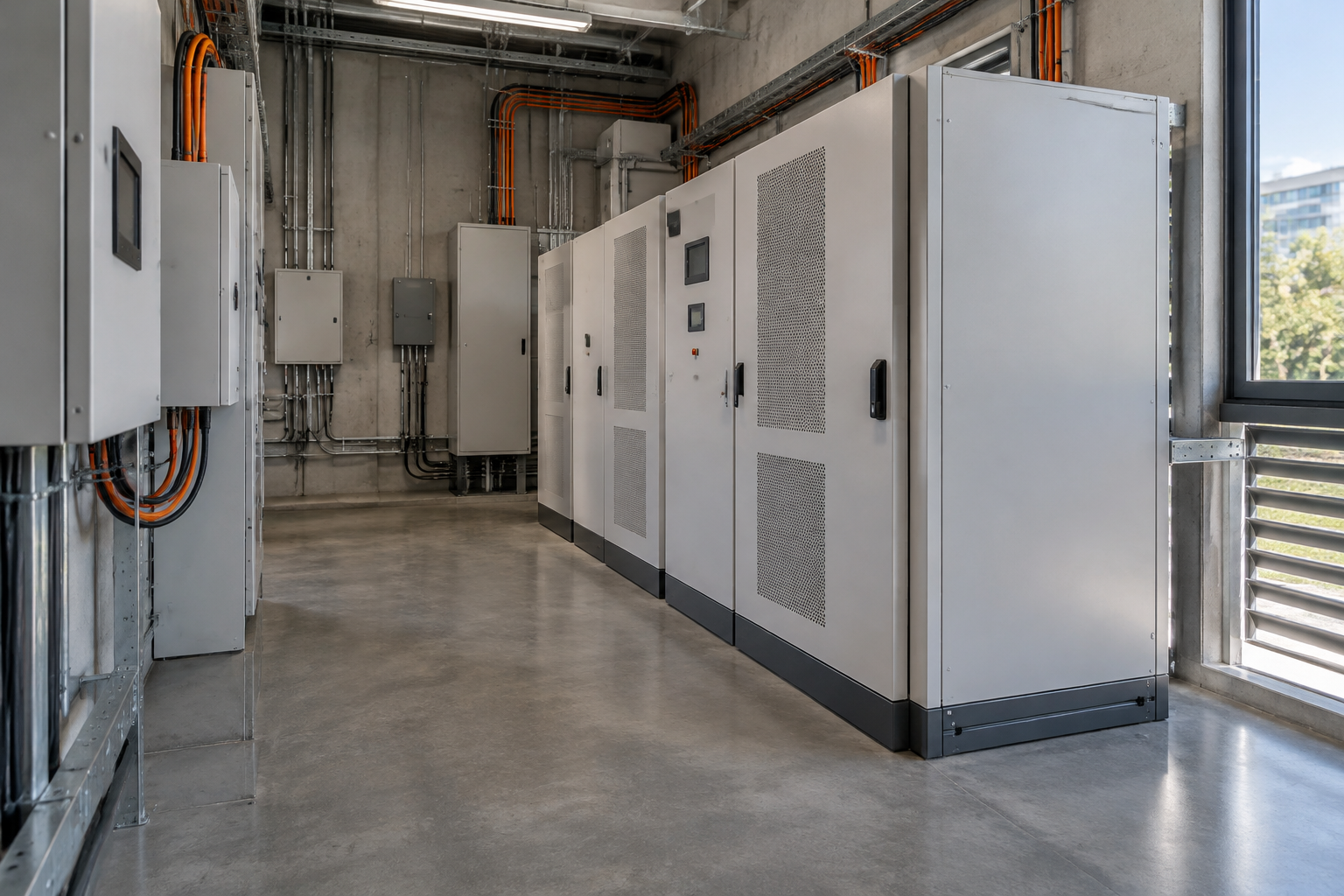
Buy for a business requirement, not a feature list
When reviewing a commercial battery proposal, it is easy to move from asking whether the investment is suitable to asking which option offers the most. For a NSW business, those are different decisions. An appealing extra should not become a purchasing requirement simply because it appears in a proposal.
Business batteries can help manage energy use and may reduce peak demand charges, but suitability needs investment assessment. Start with the outcome your business actually needs. Then ask which proposed capabilities support that outcome and which would merely be welcome additions. More possibilities do not, by themselves, establish a reason to buy.
Sort requirements before reviewing extras
Create three groups for the assessment: essential requirements, optional preferences and capabilities you are not seeking. An essential requirement should have a clear business reason. An optional preference should remain something you can decline without undermining the purpose of the purchase.
For a warehouse, hospitality venue, manufacturer, retailer or medical business, the useful question is the same: what would make this capability necessary at this site? Avoid deciding by business label alone. Ask the person requesting an extra to explain the intended outcome and whether the business would still consider a battery without it. If the answer is unclear, keep it outside the essential brief.
Treat backup as a deliberate inclusion
Backup is a useful example of a capability that needs an explicit decision. A battery supplies electricity during outages only when configured for backup. Do not assume that every battery provides it, or that a proposal includes it because the word battery appears.
If backup is optional for your business, ask for the investment assessment to distinguish the proposed arrangement with backup from an appropriate option without it. Would you still want the battery for energy management alone? Conversely, if backup is essential, do not treat it as a bonus that can remain undefined. The proposed configuration needs to address that requirement.
Ask whether each extra changes the investment case
For every optional inclusion, ask what changes in the proposed investment and what additional outcome the assessment attributes to it. Request an explanation rather than accepting a longer feature list as evidence of better value. Where an extra has no clearly assessed benefit for your business, leave its value unproven.
Keep the electricity arrangement in view. Tariffs vary by customer and location, and businesses with solar often continue buying grid electricity. If solar is also proposed, its size should reflect electricity use and timing, budget, sunny roof space and installation complexity. Do not let enthusiasm for optional battery capabilities replace those site-specific considerations.
Use a concrete decision checklist
Before approval, work through these questions and record an answer to each. What is the essential battery requirement? Which proposed inclusions directly support it? Which are optional? What changes if each optional inclusion is removed? Does the investment assessment explain the difference, rather than simply favouring the most comprehensive option?
Then check the boundaries. Is backup required, and if so, is it explicitly configured? Has any claimed demand-charge benefit been assessed against your electricity arrangement? If solar is included, has its sizing been considered on the approved factors? Finally, would the proposal still be worth considering without the optional extras?
Be prepared to decline the extras—or the battery
There are sound reasons not to proceed: the essential requirement remains unclear, the investment case rests on capabilities you do not need, or the assessment does not establish suitability. You can also decline an optional inclusion without rejecting a battery that otherwise meets your requirements.
For your next step, ask UR Energy for a NSW site assessment that separates essential requirements from optional preferences and assesses whether the proposed battery investment is suitable for your business.
Sources & further reading
- Australian Government — Solar for businesses
- NSW Government — Battery storage guide
- Australian Government — Batteries
- Australian Government — Electricity tariffs
AI-assisted editorial content based on the sources above. General information, not a site-specific recommendation. Confirm current requirements before committing to a project.