
Commercial Battery · NSW
A Battery at Every Business Site? Make Each NSW Location Earn Its Place
Planning batteries across several NSW business sites? Assess each location separately before deciding where to proceed, where to wait and where not to buy.
UR Energy editorial team ·
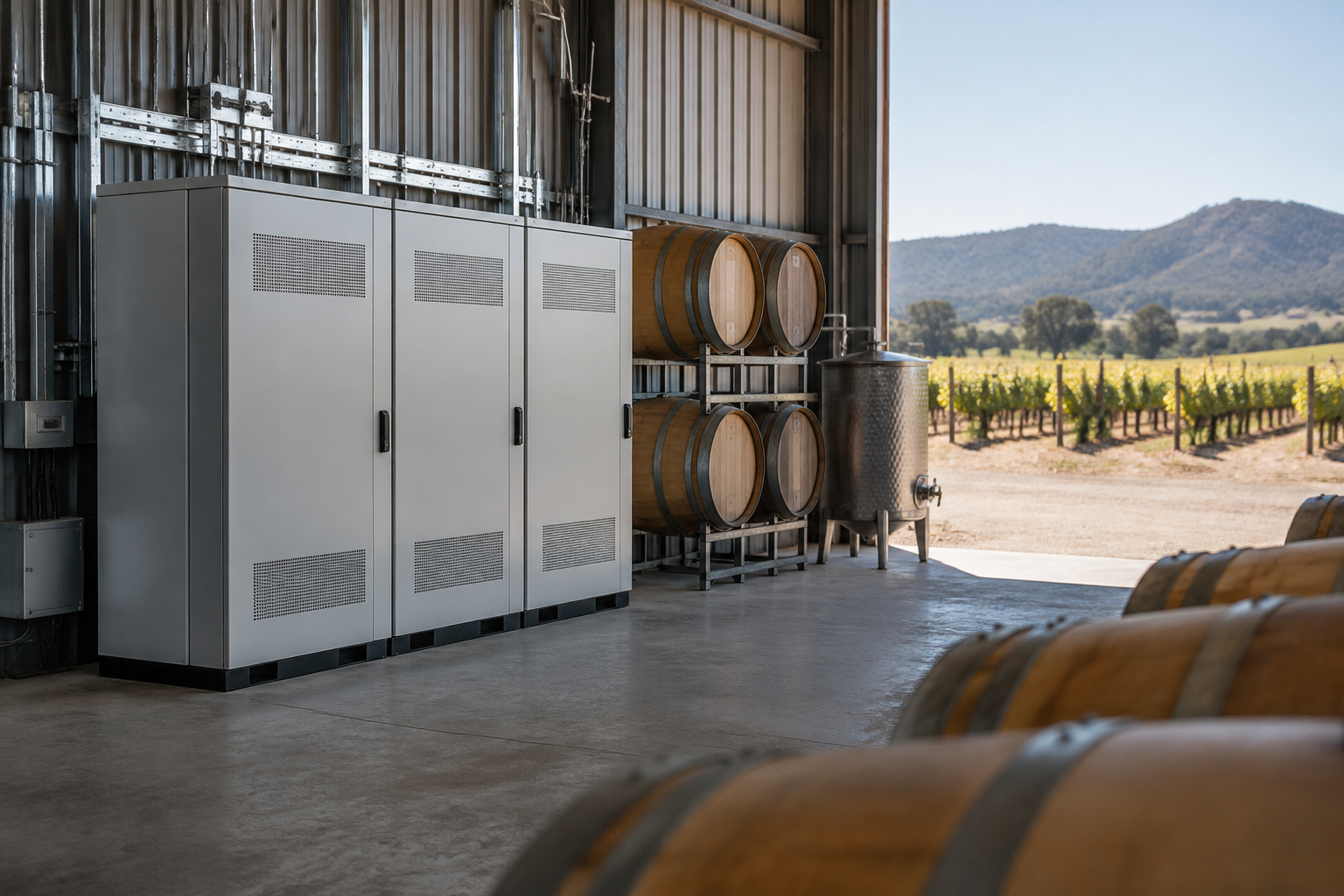
One business does not have to mean one battery decision
If your business operates several NSW locations, should a battery decision cover all of them? A more useful starting point is to ask which sites, if any, have a case for investment. Business batteries can help manage energy use and may reduce peak demand charges, but suitability needs an investment assessment. A proposal for one location should not automatically become the brief for every other address.
For UR Energy’s NSW business audience, the practical question is not simply how to roll out batteries. It is how to decide where to investigate further, where to wait and where to rule out a purchase.
Give each location its own purpose
Start by writing a short statement of what a battery would need to achieve at each site. Would the warehouse assessment focus on managing energy use? Would a hospitality or retail location need its potential peak demand charge reduction assessed? Would a medical site want outage supply considered? These are questions to resolve, not benefits to assume from the business type.
If outage supply is part of a location’s purpose, specify that backup configuration must be assessed. A battery supplies outages only when configured for backup. Do not let a group-wide request for batteries imply that every proposed system will provide it.
Keep the electricity assessment local
Tariffs vary by customer and location. Ask for the investment assessment to use the tariff relevant to each address rather than treating the business as one electricity account. Where peak demand charge reduction is proposed, ask whether that opportunity applies at the particular site and how it supports the purchase case.
If solar is already part of the discussion, do not assume it removes the need to consider grid electricity. Solar businesses often continue buying electricity from the grid. Ask what the proposal assumes about grid purchases at each location, and keep those assumptions visible when deciding which battery investments deserve further consideration.
Do not copy a solar-and-battery package across sites
Where solar is being considered alongside batteries, assess the solar design separately for each property. Solar size depends on electricity use and timing, budget, sunny roof space and installation complexity. Ask which of these considerations is shaping the proposed solar size at each address, rather than requesting the same package everywhere.
Then ask how the battery investment assessment relates to that site’s proposed solar design. If the solar scope remains unresolved, consider keeping the battery decision open rather than treating an early package as settled. For a leased NSW commercial site, include that location in the same site-specific review rather than simply copying another property’s brief.
Use a checklist that allows a no
For each location, record answers to these questions: What is the battery’s intended purpose? Which tariff has been used? Is any proposed peak demand charge reduction relevant to this site? Has investment suitability been assessed? If outage supply is requested, does the proposal specify backup configuration? If solar is included, have electricity use and timing, budget, sunny roof space and installation complexity been considered?
Add one final question: what supports buying at this address rather than waiting or not buying? Consider declining a purchase where the investment assessment does not support it. Pause where tariff assumptions remain unresolved. Do not accept an unspecified battery as an answer to a backup requirement. A decision not to proceed is a valid outcome.
Choose the next assessment, not an automatic rollout
Summarise each location as proceed to further assessment, clarify first, or do not buy on the present case. Keep the reasons beside each decision so a positive result at one address does not replace scrutiny elsewhere. There is no need to make every location reach the same conclusion.
For your next step, ask UR Energy about a NSW site assessment for the locations you want to investigate, bringing each site’s electricity use and timing, tariff, budget, intended battery purpose and any solar or backup requirements.
Sources & further reading
- Australian Government — Solar for businesses
- NSW Government — Battery storage guide
- Australian Government — Batteries
- Australian Government — Electricity tariffs
AI-assisted editorial content based on the sources above. General information, not a site-specific recommendation. Confirm current requirements before committing to a project.